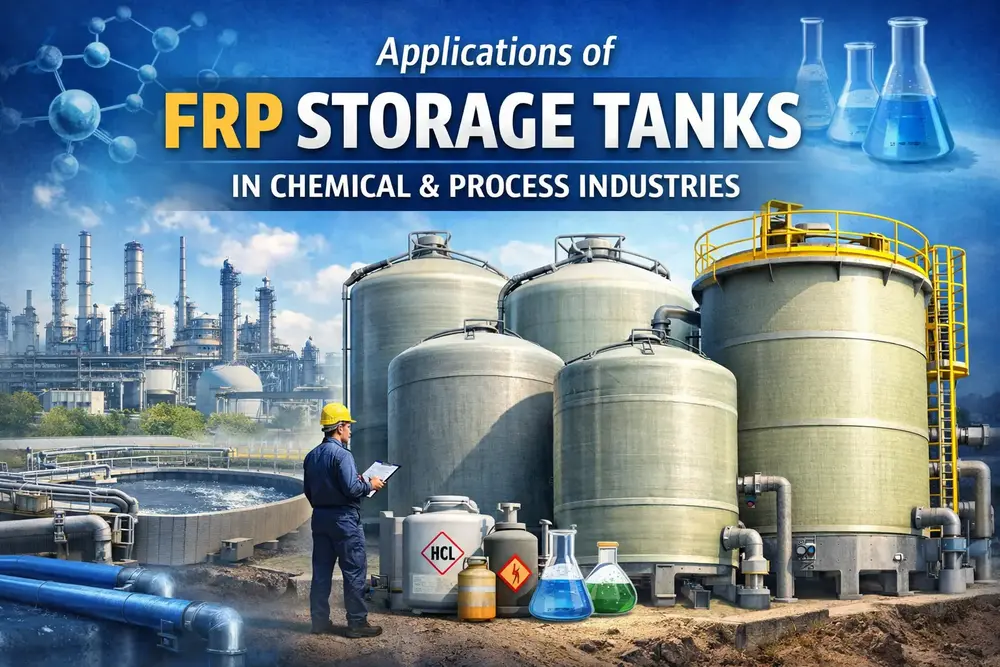
Applications of FRP Storage Tanks in Chemical and Process Industries
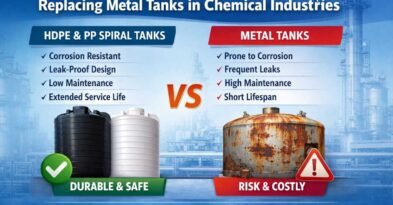
In today’s chemical and process industries, safe storage of corrosive and hazardous materials is a critical requirement. Traditional storage solutions such as steel and concrete tanks often face challenges like corrosion, leakage, high maintenance costs, and limited service life.
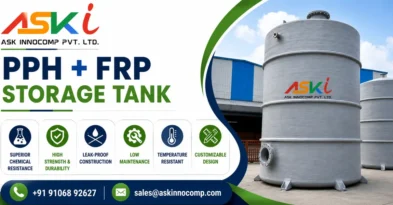
To overcome these issues, FRP (Fiber Reinforced Plastic) storage tanks have emerged as a reliable, cost-effective, and long-lasting solution. Due to their excellent chemical resistance, mechanical strength, and lightweight nature, FRP tanks are widely used across various industrial sectors.
This blog explores the key applications of FRP storage tanks in chemical and process industries, along with their advantages and practical uses.
What Are FRP Storage Tanks?
FRP storage tanks are manufactured using reinforced fibers (such as glass fibers) combined with thermosetting resins like polyester, vinyl ester, or epoxy. This composite structure provides:
- High resistance to corrosion and chemicals
- Excellent strength-to-weight ratio
- Long service life with minimal maintenance
- Flexibility in design and capacity
Because of these properties, FRP tanks are ideal for storing aggressive chemicals, liquids, and industrial effluents.
Why Chemical and Process Industries Prefer FRP Tanks
Chemical and process industries operate in harsh environments where materials are exposed to acids, alkalis, solvents, and high temperatures. FRP tanks are preferred because they offer:
- Superior corrosion resistance compared to steel
- No rusting or scaling
- Low installation and transportation cost
- Customizable size, shape, and lining
- Compliance with industrial safety standards
Major Applications of FRP Storage Tanks
Storage of Corrosive Chemicals
One of the most common applications of FRP tanks is the storage of corrosive chemicals, including:
- Hydrochloric Acid (HCl)
- Sulfuric Acid (H₂SO₄)
- Nitric Acid (HNO₃)
- Sodium Hydroxide (Caustic Soda)
- Chlorine and bleaching agents
FRP tanks are designed with specific resin systems and liners to safely store these chemicals without degradation, leakage, or contamination.
Effluent Treatment Plants (ETP) and Wastewater Management
FRP storage tanks are extensively used in Effluent Treatment Plants (ETP) and Sewage Treatment Plants (STP) for:
- Collection of industrial wastewater
- Storage of neutralization chemicals
- Sludge storage tanks
- Chemical dosing tanks
Their corrosion resistance makes them ideal for handling acidic and alkaline effluents generated by chemical and process industries.
Process Chemical Storage in Manufacturing Plants
In process industries, uninterrupted production depends on safe and continuous availability of process chemicals. FRP tanks are used for storing:
- Process intermediates
- Raw materials
- Reactants and additives
Their ability to withstand chemical reactions, temperature variations, and pressure changes makes them suitable for demanding industrial processes.
Storage of Solvents and Industrial Liquids
Many chemical and pharmaceutical industries use solvents such as:
- Methanol
- Ethanol
- Acetone
- Toluene
FRP tanks provide safe, non-reactive storage for these solvents, reducing the risk of leaks, evaporation losses, and contamination.
Acid and Alkali Dosing Systems
FRP tanks are widely used in chemical dosing systems for water treatment and industrial processes. These tanks store chemicals used for:
- pH correction
- Coagulation and flocculation
- Disinfection processes
Their smooth internal surface prevents scaling and allows accurate dosing and easy cleaning.
Chemical Storage in Power Plants and Refineries
Power plants and refineries use FRP tanks for storing:
- Cooling water treatment chemicals
- Anti-scalants and biocides
- Fuel additives and process chemicals
FRP tanks ensure long-term performance even in high-temperature and corrosive environments.
Food, Pharma, and Specialty Chemical Industries
While maintaining industrial safety, FRP tanks are also used in:
- Pharmaceutical manufacturing
- Specialty chemical plants
- Food processing industries (non-reactive liquids)
With food-grade or pharma-grade liners, FRP tanks meet hygiene and safety standards required in sensitive industries.
Key Advantages of FRP Storage Tanks
✅ Excellent chemical and corrosion resistance
✅ Lightweight and easy to install
✅ Long service life (20–30 years)
✅ Low maintenance cost
✅ Custom-designed for specific applications
✅ Suitable for outdoor and indoor installation
Choosing the Right FRP Tank for Your Industry
When selecting an FRP storage tank, industries should consider:
- Type of chemical to be stored
- Concentration and temperature
- Required storage capacity
- Pressure and environmental conditions
- Applicable safety and regulatory standards
A properly designed FRP tank ensures maximum safety, efficiency, and compliance.
Conclusion
FRP storage tanks have become an essential component of chemical and process industries due to their durability, safety, and cost-effectiveness. From corrosive chemical storage to wastewater treatment and process applications, FRP tanks offer a reliable and future-ready storage solution.
Industries looking for long-term performance, minimal maintenance, and superior chemical resistance can confidently choose FRP storage tanks to meet their operational needs.